Cassville, MO · Barry County
Basement Water Removal in Cassville, MOBasement Moisture Inspection & Basement Dehumidification
Basement Water Removal in Cassville runs from basement water pump out and basement drying services to basement dehumidification.
Answered 24/7
Reliable Basement Water Removal Near Cassville, Missouri
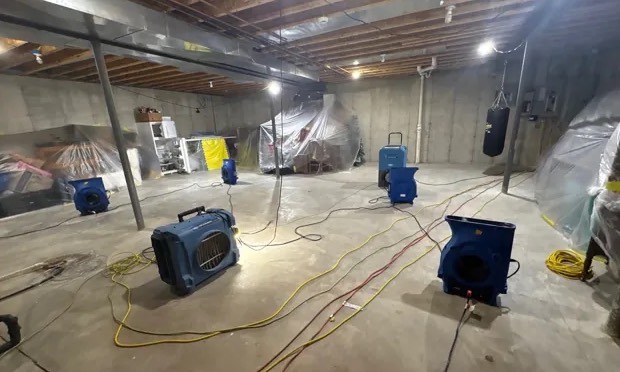
Dehumidification is the slow but necessary part of basement water removal in Cassville. Pumps remove standing water quickly, but walls and concrete keep releasing moisture for days.
Homeowners in Cassville can call (479) 370-1500 day or night when the basement is taking on water. Service also covers Holiday Island, Shell Knob and Monett, with the same pumping and drying steps.
The Basement Water Removal Process in Cassville
Basement Moisture Inspection
Moisture meters and thermal cameras check walls, floors and the slab for water that is not visible, including behind finished walls.
Basement Dehumidification
After drying, a household dehumidifier may still be needed to keep basement humidity in a healthy range.
Basement Water Pump Out
When water is more than an inch or two deep, pumps move it far faster than wet vacs, which limits how long walls sit in water.
Basement Drying Services
Drying plans for basements account for cool air and thick concrete, which hold moisture longer than upper floors.
Basement Wall Drying
Concrete and block walls dry with directed airflow and dehumidification, which pull water out of the masonry.
Signs of Basement Water Damage in Cassville
Efflorescence on Concrete Walls
White, powdery deposits on concrete walls mean water is passing through the masonry.
Musty Odors and Mold Smell
A musty or damp smell in the basement points to wet materials hidden somewhere in the space.
Wet or Damp Basement Walls
Basement walls that look dark, feel damp or show tide lines are taking on or holding water.
Rusted Appliances or Furniture
Rust on appliance bases, furniture legs or metal shelving points to standing water or long-term dampness.
How Basement Water Removal Works in Cassville
Step 1: Safety Assessment and Pump Out
Electrical hazards are checked, then deep water is pumped outside away from the foundation.
Step 2: Content Removal and Damage Documentation
Wet belongings are moved, and photos record the water level and damaged materials.
Step 3: Targeted Water Removal and Drying
Carpet is extracted, wet drywall is cut back and air is aimed at walls and the slab.
Step 4: Sanitization and Moisture Control
Surfaces touched by dirty water are disinfected, and dehumidifiers keep humidity low.
Sources of Basement Water Problems
Plumbing Leaks or Pipe Bursts
Supply lines, drain pipes and water heaters in the basement can leak or burst onto the floor.
Improper Landscape Grading
Soil that slopes toward the house directs rainwater straight to the basement walls.
Appliance Malfunctions and Overflows
Washers, utility sinks and water softeners in the basement can overflow or leak.
Heavy Rainfall and Storm Flooding
Heavy rain saturates the soil and pushes water through walls, cracks and the floor joint.
Basement Water Removal for Homes and Businesses
Residential Basement Water Removal
In homes, a wet basement often means damaged carpet, drywall and stored belongings, plus a furnace or water heater sitting in water. Water is pumped out and the space dried.
Commercial Basement Water Removal
In commercial buildings, basements often house mechanical rooms and storage. Water is removed so systems can be checked to determine whether they can be restarted safely.
Professional Basement Water Removal Versus Do-It-Yourself
You can move belongings up off the floor and run the dehumidifier you already own. Drying soaked walls and slab needs larger equipment and readings to confirm the job is done.
Basement Water Removal Cost in Cassville, MO
In Cassville, the drying phase usually costs more than the pumping, because basements need equipment running for several days.
Additional Services
Antimicrobial treatment, contents cleaning and repairs after drying add to the cost.
Basement Square Footage
Larger basements need more extraction, more drying equipment and more days of drying.
Affected Materials
Finished walls, carpet and laminate take more removal work than bare concrete.
Does Insurance Cover Basement Water Removal?
Coverage for basement water removal depends on the water source and your policy. The pros document the damage and drying, and your insurer decides what is covered.
Why Choose Local Pros for Basement Water Removal in Cassville
Focus on Drying Outcomes
Drying continues until readings are normal, not just until surfaces look dry.
Contamination Safety Protocols
Sewage and dirty water are handled with protective gear, containment and disinfection.
Moisture Inspection
Meters and thermal cameras find water in walls, floors and slab that looks dry.
Emergency Basement Water Removal Available 24/7
Storm night, weekend or holiday, local water damage pros handle basement water in Cassville. Call (479) 370-1500 to get pumps running and drying started.
Call Now (479) 370-1500Basement Water Removal Serving Cassville and Surroundings
Each place listed below has its own page with local details.
- Basement Water Removal in Holiday Island
- Basement Water Removal in Shell Knob
- Basement Water Removal in Monett
- Basement Water Removal in Pierce City
- Basement Water Removal in Eureka Springs
- Basement Water Removal in Aurora
- Basement Water Removal in Pea Ridge
- Basement Water Removal in Marionville
- Emergency Damage Restoration in 65625
- Storm Damage Restoration in 65625
- Water Damage Restoration in 65625
- Water Extraction Service in 65625
- Water Leak Detection in 65625
- Water Removal Service in 65625
Basement Water Removal FAQs
What causes basement floor water damage?
Storm seepage, burst pipes, appliance leaks, foundation cracks and sewer backups through floor drains are the usual sources.
How long does basement drying take?
Often several days or longer, because concrete and cool basement air hold moisture. Daily readings show when it is done.
What is involved in basement leak cleanup?
Stopping the leak, extracting the water, drying the floor and walls and checking for hidden moisture under flooring.
How is contaminated water handled in a basement?
With protective gear, containment, removal of porous materials and disinfection of hard surfaces before drying.
What should I do right after basement flooding?
Make power safe, avoid sewage, move belongings above the water, take photos and call for water removal.