Rogers, AR · Benton County
Basement Water Removal in Rogers, ARBasement Floor Water Damage & Basement Moisture Inspection
Basement Water Removal in Rogers handles basement wall drying, basement floor water damage and basement dehumidification before the space turns musty.
Answered 24/7
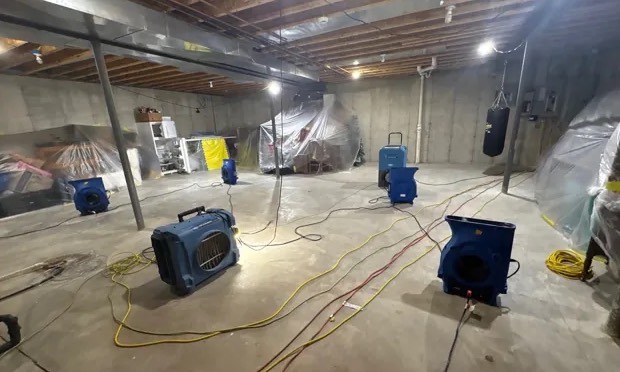
Professional Basement Water Removal in Rogers, AR
In Rogers, a finished basement or lower level takes more work after a flood. Carpet, pad, laminate, drywall and insulation all trap water against the concrete and framing.
A single storm or burst pipe in Rogers can flood a basement. Local water extraction experts serve Rogers and nearby Lowell, Bentonville and Cave Springs, with help available around the clock.
The Basement Water Removal Process in Rogers
Basement Floor Water Damage
Flooring that buckled or swelled is removed. Tile and sealed concrete can often be cleaned and dried in place.
Basement Moisture Inspection
Readings are recorded at each visit, giving you and your insurer a clear record of the drying.
Basement Dehumidification
Large dehumidifiers pull moisture from basement air, which lets walls, framing and the slab release the water they absorbed.
Basement Water Pump Out
A pump-out removes standing water from the basement with submersible pumps, discharging it outside and away from the foundation.
Emergency Basement Flooding
Help is available any hour when water is rising in the basement from a storm, a sewer backup or a burst pipe.
When to Call for Basement Water Removal in Rogers
Wet or Damp Basement Walls
Basement walls that look dark, feel damp or show tide lines are taking on or holding water.
Efflorescence on Concrete Walls
White, powdery deposits on concrete walls mean water is passing through the masonry.
Warped or Buckling Flooring
Flooring that buckles, lifts or feels spongy has water trapped between it and the slab.
Mold or Mildew
Dark spots on drywall, framing or stored items mean the area has stayed wet for days.
How Basement Water Removal Works in Rogers
Step 1: First Call and Initial Assessment
The source, the type of water and the depth are checked, and the water level is photographed.
Step 2: Bulk Water and Contaminant Removal
Pumps remove standing water, and carpet, pad or drywall touched by dirty water is removed.
Step 3: Drying With Monitoring
Dehumidifiers and air movers run around the clock, with readings logged every day on walls and slab.
Step 4: Post-Drying Evaluation and Documentation
Final readings and photos are compiled to show the basement is dry and what was removed.
Why Basements Flood in Rogers
Clogged or Damaged Gutters
Clogged gutters and short downspouts dump roof water right next to the foundation.
Appliance Malfunctions and Overflows
Washers, utility sinks and water softeners in the basement can overflow or leak.
High Water Table and Hydrostatic Pressure
A high water table presses groundwater against the slab and walls, forcing it inside.
Heavy Rainfall and Storm Flooding
Heavy rain saturates the soil and pushes water through walls, cracks and the floor joint.
Basement Water Removal for Homes and Businesses
Residential Basement Water Removal
Finished basements used as bedrooms or family rooms need careful moisture checks behind walls and under flooring, since that is where water hides.
Commercial Basement Water Removal
Businesses with below-grade storage need wet inventory moved out and documented. Drying is planned around daily operations wherever possible.
Professional Basement Water Removal Versus Do-It-Yourself
A small puddle on bare concrete can be handled with a wet vac, towels and a dehumidifier. Call local water extraction experts if water reached carpet, drywall or framing, or covers much of the floor.
Factors Affecting Basement Water Removal Cost
The cost of basement water removal in Rogers depends on how deep the water is, what type of water it is and how much finished material has to come out.
Water Depth and Volume
Deeper water takes more pumping time and usually means more materials got wet.
Drying Time Required
Basements dry slowly, and each extra day of equipment adds to the total.
Contamination Level
Sewage or dirty water needs protective gear, removal and disinfection, which costs more.
Does Insurance Cover Basement Water Removal?
Many homeowner policies cover sudden basement water from a burst pipe but not groundwater seepage. Sewer backup coverage is often an add-on, so check yours.
Benefits of Hiring Local Pros for Basement Water Removal in Rogers
Advanced Drying Equipment
Pumps, extractors and large dehumidifiers remove water much faster than household tools.
Post-Service Moisture Verification
Final readings are recorded before equipment leaves, so you know the basement is dry.
Methodical Water Removal Process
Water is removed in a set order: pump-out, extraction, removal of soaked materials, then drying.
24/7 Basement Water Removal When You Need It
Storm night, weekend or holiday, the experts handle basement water in Rogers. Call (479) 370-1500 to get pumps running and drying started.
Call Now (479) 370-1500Basement Water Removal Serving Rogers and Surroundings
Help with basement water removal is also available in communities near Rogers, including Lowell, Bentonville and Cave Springs, for flooded basements and sewer backups.
- Basement Water Removal in Lowell
- Basement Water Removal in Bentonville
- Basement Water Removal in Cave Springs
- Basement Water Removal in Pea Ridge
- Basement Water Removal in Centerton
- Basement Water Removal in Springdale
- Basement Water Removal in Bella Vista
- Basement Water Removal in Tontitown
- Emergency Damage Restoration in 72756
- Storm Damage Restoration in 72756
- Water Damage Restoration in 72756
- Water Extraction Service in 72756
- Water Leak Detection in 72756
- Water Removal Service in 72756
- Emergency Damage Restoration in 72757
- Storm Damage Restoration in 72757
Frequently Asked Basement Water Removal Questions
What is the difference between a pump out and extraction?
A pump out removes deep standing water. Extraction pulls the remaining water from carpet, pad and floors.
What happens during basement moisture control?
Dehumidifiers and air movers keep humidity low while materials dry, and readings confirm when the space is normal.
What should I do right after basement flooding?
Make power safe, avoid sewage, move belongings above the water, take photos and call for water removal.
What is involved in basement water removal?
Making power safe, pumping out standing water, extracting floors and carpet, removing soaked materials and dehumidifying until dry.
Does basement flood cleanup include mold prevention?
Fast drying is the main prevention. Wood and concrete that stayed wet can be treated with an antimicrobial once dry.