Lowell, AR · Benton County
Basement Water Damage Restoration in Lowell, ARBasement Wall Drying & Basement Dehumidification
Basement Water Damage Restoration in Lowell includes emergency basement flood cleanup, basement sewer backup cleanup and basement wall drying.
Answered 24/7
Local Basement Water Damage Restoration Near Lowell
Basement Water Damage Restoration in Lowell usually involves two parts: the emergency work of removing water and the slower work of drying a below-grade space. Both matter for keeping repairs small.
Homeowners in Lowell can call (479) 370-1500 day or night when water is rising in the basement. Service also covers Springdale, Rogers and Cave Springs, with the same pumping and drying steps.
The Basement Water Damage Restoration Process in Lowell
Basement Wall Drying
Finished basement walls hide wet insulation and framing. Removing the bottom of the drywall lets air reach the cavity.
Basement Dehumidification
Dehumidification continues until humidity and material readings are normal. Turning it off too early lets moisture return.
Basement Sewer Backup Cleanup
After a sewer backup, cleanup and disinfection come before drying, so contaminated surfaces are not left in place.
Emergency Basement Flood Cleanup
A flooded basement can damage furnaces, water heaters and stored items quickly. Fast pumping limits how much is lost.
Basement Mold Prevention
Fast extraction and drying are the main ways to limit microbial growth in a basement. Surfaces that stayed wet can be treated once dry.
Signs of Basement Water Damage in Lowell
Warped or Buckling Basement Floors
Laminate, wood or vinyl flooring that buckles or lifts in the basement has water underneath.
High Humidity Levels Below-Grade
A basement that stays damp and clammy even on dry days has a moisture source that needs attention.
Condensation on Windows or Pipes
Water beading on cold pipes or basement windows shows high humidity that keeps materials damp.
Wet or Stained Basement Walls
Dark, wet patches or tide lines on basement walls show where water seeped in or wicked up.
How Basement Water Damage Restoration Works in Lowell
Step 1: Water Removal
Pumps and extractors remove standing water from the basement floor, starting at the lowest point.
Step 2: Targeted Moisture Evaporation
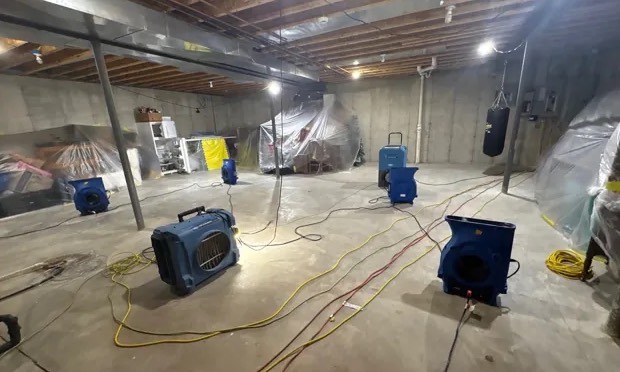
Air movers are aimed at wet walls, framing and the slab to speed evaporation.
Step 3: Humidity Control
Large dehumidifiers pull moisture from the basement air, with readings checked every day.
Step 4: Final Verification and Restoration
Final readings confirm the basement is dry, and the space is ready for drywall and flooring repairs.
Frequent Sources of Water Damage in Lowell
Stormwater Runoff Into Lower Levels
Heavy rain running off hard ground or a sloped yard can pour down stairwells and under doors into below-grade rooms.
Sewer Line Backups
A blocked or overloaded sewer line pushes wastewater up through basement drains and toilets.
Clogged Floor Drains
A floor drain blocked by debris cannot carry off water from a leak or overflow, so it spreads across the basement floor.
Faulty Basement Waterproofing
Old or failed waterproofing on foundation walls lets water through during wet weather.
Both Residential & Commercial Basement Water Damage Restoration in Lowell
Residential Basement Water Damage Restoration
Finished basements used as living space need carpet, pad and lower drywall checked carefully. Soaked materials are removed so the walls and slab can dry.
Commercial Basement Water Damage Restoration
Businesses with below-grade storage need inventory moved out of the water quickly. Wet stock is separated and documented for insurance.
When to DIY and When to Call the Pros for Basement Water Damage Restoration
Keeping gutters and downspouts clear and checking water heater and washer hoses are good DIY steps before storm season. Once water is on the floor, call (479) 370-1500.
What Influences Basement Water Damage Restoration Cost in Lowell
Sewage cleanup, finished walls, storm-night calls and damaged appliances all add to the total for basement water damage restoration in Lowell.
Secondary Damage
Damage to furnaces, water heaters and belongings adds repair and replacement costs.
Material Saturation
Finished basements with carpet, drywall and insulation take more removal work than bare concrete.
Access Complexity
Narrow stairs, low ceilings and stored contents can make the work slower.
Does Insurance Cover Basement Water Damage Restoration?
Flood damage from rising outside water usually needs flood insurance. Water from inside the home, like a broken pipe, is more often covered.
Why Choose Local Pros for Basement Water Damage Restoration in Lowell
Advanced Moisture Detection
Moisture meters and thermal cameras find water in walls and slabs that looks dry.
Containment Strategies
Plastic sheeting keeps contaminated areas separate from clean parts of the house.
Water Extraction First
Water is removed from floors, carpet and pad before drying starts, which shortens drying time.
24/7 Emergency Basement Water Damage Restoration for Lowell
Every hour of standing water in a basement means more drywall and flooring to replace. Call (479) 370-1500 for basement water damage restoration in Lowell.
Call Now (479) 370-1500Basement Water Damage Restoration Serving Lowell, Springdale, Rogers and Cave Springs
Help with basement water damage restoration is also available in communities near Lowell, including Springdale, Rogers and Cave Springs, for flooded basements and sewer backups.
- Basement Water Damage Restoration in Springdale
- Basement Water Damage Restoration in Rogers
- Basement Water Damage Restoration in Cave Springs
- Basement Water Damage Restoration in Tontitown
- Basement Water Damage Restoration in Bentonville
- Basement Water Damage Restoration in Centerton
- Basement Water Damage Restoration in Fayetteville
- Basement Water Damage Restoration in Pea Ridge
- Emergency Damage Restoration in 72745
- Storm Damage Restoration in 72745
- Water Damage Restoration in 72745
- Water Extraction Service in 72745
- Water Leak Detection in 72745
- Water Removal Service in 72745
FAQ for Basement Water Damage Restoration in Lowell
Does basement mold prevention need special steps after flooding?
Fast drying is the main step. Wood and concrete that stayed wet can be treated with an antimicrobial once dry.
What health risks come with delayed basement flood cleanup?
Standing water and wet materials can support bacteria and microbial growth, and sewage carries contaminants that need disinfection.
What causes the most common below-grade leaks in homes?
Sump pump failures, foundation cracks, clogged drain tile, sewer backups and burst pipes in the basement ceiling.
How is basement sewer backup cleanup different from regular flooding?
Sewage carries bacteria, so it needs protective gear, removal of porous materials and disinfection before drying.
What equipment is used for below-grade water damage repair?
Submersible pumps, extractors, air movers, large dehumidifiers, moisture meters and air scrubbers for dust and odor.